The Bench-Count Fallacy: Why Seat Placement Matters More Than Seat Numbers
Bench placement can make public seating easier to use. See how views, approach space and nearby activity shape a comfortable place to pause.
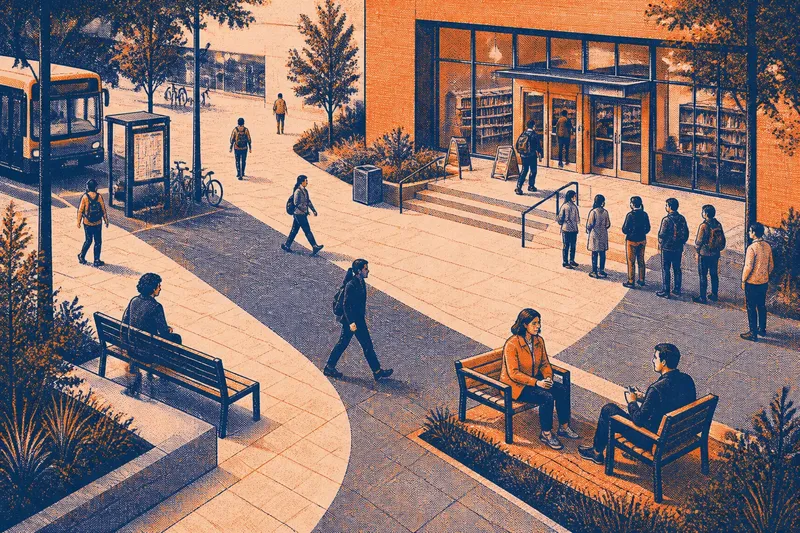
Bench placement can make public seating easier to use, even when a square already has enough seats. A bench beside a library entrance may be in full view yet feel uncomfortable if people queue behind it or approach from an awkward angle. The location, orientation and company a seat keeps all affect whether someone chooses to stop.
Why can a new bench stay unused?
A seat may look available on a plan but feel exposed or awkward on the ground. It might face a blank wall, sit beside a delivery entrance or leave a person directly in the path of people crossing the square.
Visibility is not the same as comfort. People may prefer a place where they can watch activity without feeling watched themselves, and where a passing crowd does not come close behind them.
Before adding seats, observe the square during its ordinary daily rhythms. Notice where people already pause, which approaches stay busy and how the experience changes with shade, glare or nearby activity.
How does bench placement affect a busy route?
A bench beside a desire line—the route people naturally take across a space—can make both sitting and walking awkward. Pedestrians may brush past seated people, while those sitting may keep their belongings close and feel obliged to monitor the flow.
Look for worn paths, repeated crossing points and the way people move around existing obstacles. A seat should not block an entrance approach, create a pinch point or occupy the spot where people naturally slow down to choose a direction.
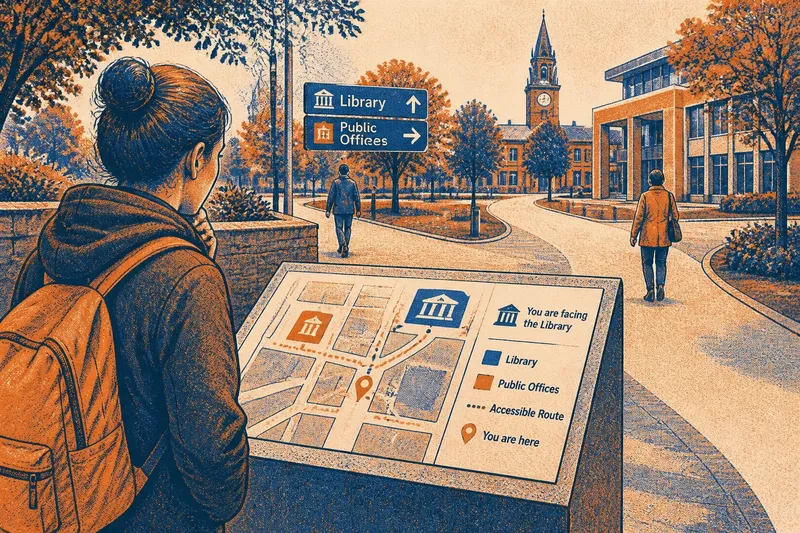
Say a small plaza has a direct footpath from a transit stop to a library door, and people cut across a proposed seating area. In this invented situation, the team moves the bench to a quieter edge and turns it towards the plaza. The expected result is a more direct walking line and a seat that still faces everyday activity.
Which view should a bench face?
Orientation shapes the experience more than a drawing can suggest. A bench facing a blank façade may feel unwelcoming; one aimed at an active frontage, a planted area or a broad view can give a pause a clearer focus.
If the site is open to the public, sit in the proposed position and look around. Check what you can see without twisting, whether people approach from behind and whether the view is worth sharing, such as a play area or lively shopfront.
Not every bench needs the same orientation. A pair of seats angled towards each other may invite conversation, while a single bench turned towards the square may suit someone watching its activity.
What nearby activity makes a seat uncomfortable?
A lively setting can make a good place to sit, but some activity is harder to share. A steady stream of pedestrians may be pleasant to watch; a delivery entrance, loud ventilation outlet or queue spilling beside the seat may leave little room for a quiet pause.
Notice the type of movement and sound, not just how much there is. See whether people pause naturally nearby or hurry through, and whether noise, fumes or a queue gather in one particular corner.
If one source is the problem, try a modest change of position or angle before adding a screen. A planting strip or low wall may offer a little separation, but fixed features should not obscure visibility or obstruct a route.
How can a seating layout welcome different users?
A long, uninterrupted bench can feel socially awkward: strangers may feel too close, and someone sitting alone may struggle to claim comfortable space. A scattering of isolated seats, though, can make conversation difficult and leave groups searching for somewhere to gather.
Match the arrangement to likely use. Short bench sections can offer more choice about distance; seats angled towards one another can support conversation without making every person face a stranger directly.
Notice where people put bags, pushchairs and mobility aids. If belongings block the approach or take up a neighbouring seat, the layout may need more usable space around it rather than more furniture.
What should you check before changing bench placement?
- Walking lines: Trace the routes people actually take. If a seat crosses a regular path, move it clear of that line; if it does not, check the approach and turning space before keeping its position.
- Approach space: Check whether someone can reach and leave the seat without squeezing past others. If the approach is blocked, clear it or relocate the bench; if it is open, check whether people can also pass without brushing against sitters.
- View and orientation: Sit in the intended position and look around. If the view is blank or people approach from an uncomfortable angle, turn or move the bench; if the view works, check that the seat still relates to nearby activity.
- Sound and activity: Listen for traffic, servicing, queues or mechanical noise. If one source dominates, shift the seat or consider a light buffer; if no single source is intrusive, assess whether the spot feels too isolated instead.
- Different uses: Consider whether the location suits someone alone, a conversation or someone watching nearby activity. If one arrangement cannot support those uses, provide a mix of seating; if one use clearly suits the site, avoid adding furniture that obstructs it.
- Changing conditions: Revisit at another time of day and in different ordinary weather. If shade, glare or a busy frontage changes the experience, adjust the location or orientation; if the conditions remain comfortable, check that the seat still works when the space is quieter.
These checks are about noticing, not applying a formula. A bench beside a quiet library entrance may work poorly beside a food stall, even if the seats look identical.
How should you judge bench placement in a public space?
How far should a bench sit from a walking route?
There is no single spacing that suits every site. Keep the main walking line clear, then judge whether a seated person and someone passing can share the edge without brushing, stopping or diverting around each other.
Should benches face each other?
Facing seats can make conversation easier, but they may feel too exposed in a busy setting. Use them where talking is likely, and angle other seats towards a view or everyday activity.
Where should a bench go in a small plaza?
Start by identifying the main pedestrian flow, then look for an edge connected to something people may want to watch. Avoid blocking a crossing, queue or entrance, and check that the seat does not create an isolated dead end.
How can you tell whether a bench is poorly placed?
Look for repeated signs of friction: people standing nearby instead of sitting, passing close behind seated users, or moving on quickly. These clues suggest a location or orientation problem, though the cause can vary from one site to another.
Should you move the bench or change its surroundings?
Start with the least disruptive adjustment that addresses what you have observed. If people cut behind a bench, turn or move it away from the route; if they avoid it because it faces a blank wall, choose a better view.
Imagine a small paved square with a bench beside a café queue. People keep walking behind the seat, and the queue sometimes reaches its approach. In this invented situation, the team notes the queue’s direction, moves the bench to the square’s quieter edge and angles it towards a planted area. The expected result is a clear approach that does not cross the queue, with the trade-off that sitters are less close to the café’s activity.
When reviewing bench placement, treat each seat as part of a setting: its approach, back, view and relationship to nearby movement all matter. A short observation on site can reveal a blocked path or uncomfortable approach that a tidy drawing misses.